 RetroReady
What was the Satellaview, and why is so much of it lost?
The Satellaview was a Japan-only satellite add-on for the Super Famicom. Here is how it worked, the games made for it, and why much of it is lost.
What did the Satellaview do?
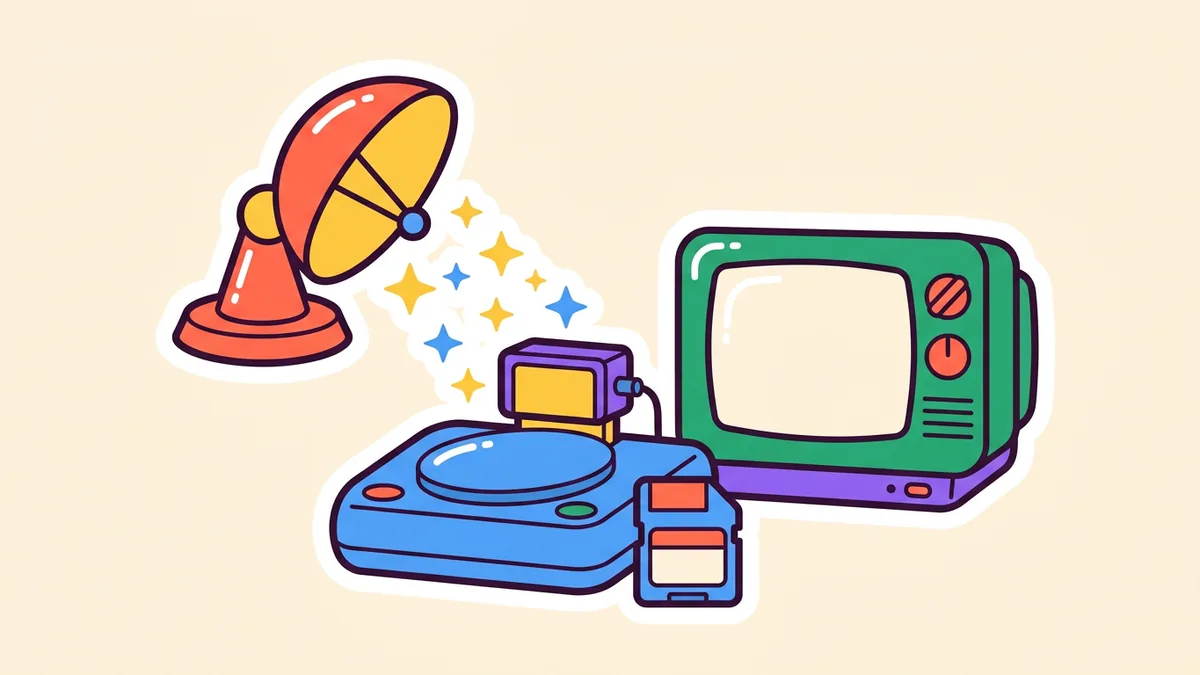
It attaches to the expansion port on the bottom of the Super Famicom. St.GIGA provided the satellite and broadcasting services, while Nintendo and other developers produced content. Players purchased or rented a broadcast satellite tuner.1
It was released in Japan on April 23, 1995, and was never released outside Japan. It was only sold via mail order, instead of being released into stores.1
How did the broadcasts and memory packs work?
The service was provided free of charge and broadcast unscrambled. It was funded through sales of the device and advertising. Users still had to purchase or rent a satellite dish and receiver.1
The required system cartridge is BS-X: The Town Whose Name Was Stolen, a commonly used translation. It works as an interactive menu for the service and as a standalone game. Game and broadcast data are stored on 8-megabit memory packs that insert into the top of this cartridge.1
Soundlink games were broadcast with live voice acting. Unlike other Satellaview games, they could only be played on a live schedule.1
Which games were made for the Satellaview?
A total of 114 games were released. Some are remakes or updates of older Family Computer and Super Famicom games, and others were created specifically for the service.1
Nintendo's original games include Sutte Hakkun. EarthBound creator Shigesato Itoi designed a fishing game. Third-party games include SquareSoft's Radical Dreamers, Pack-In-Video's Harvest Moon and Chunsoft's Shiren the Wanderer.1
Why did the Satellaview end?
Nintendo withdrew support in March 1999. St.GIGA discontinued broadcasts on 30 June 2000, due to a lack of sponsors and a dwindling user base.1
Its adoption was hindered by the introduction of technologically superior fifth-generation consoles, as well as its high cost and limited availability.1
Why is so much of the Satellaview lost?
Most of its content was lost after the service closed. Preservationists and fans have searched for memory packs to recover game data and preserve it online.1
Publications have raised concerns about the permanent loss of much content, specifically live audio from Soundlink games and digital newsletters.1
Frequently asked
Was the Satellaview released outside Japan?
No. It was never released outside Japan.1
How many games did the Satellaview have?
A total of 114 games were released for it.1
What size were Satellaview memory packs?
Game and broadcast data are stored on 8-megabit memory packs that insert into the top of the cartridge.1
Sources
- Satellaview, Wikipedia: "The Satellaview is a satellite modem peripheral for the Super Famicom" · "the Satellaview allowed players to download games, magazines, and other media through satellite broadcasts provided by St.GIGA." · "It has developed a cult following due to much of its library being presumed lost." · "It attaches to the expansion port on the bottom of the Super Famicom." · "St.GIGA provided the satellite and broadcasting services, while Nintendo and other developers produced content." · "Players purchased or rented a broadcast satellite tuner." · "It was released in Japan on April 23, 1995" · "Satellaview was never released outside Japan" · "It was only sold via mail order, instead of being released into stores." · "The Satellaview service was provided free of charge and broadcast unscrambled, funded through sales of the device and advertising." · "Users were still required to purchase or rent a satellite dish and receiver" · "The required system cartridge, BS-X: Sore wa Namae o Nusumareta Machi no Monogatari (commonly translated as BS-X: The Town Whose Name Was Stolen), functions both as an interactive menu for the Satellaview service and as a standalone game." · "Game and broadcast data are stored on 8-megabit memory packs that insert into the top of this cartridge." · "Soundlink games were broadcast with live voice acting by radio personalities and commentators." · "Unlike other Satellaview games, SoundLink games could only be played on a live schedule." · "A total of 114 games were released for Satellaview; some are remakes or updates of older Family Computer and Super Famicom games, and others were created specifically for the service." · "Nintendo's original games include Sutte Hakkun." · "EarthBound creator Shigesato Itoi designed a fishing game called Itoi Shigesato no Bass Tsuri No. 1." · "Third-party games include SquareSoft's Radical Dreamers and Treasure Conflix, Pack-In-Video's Harvest Moon, Chunsoft's Shiren the Wanderer" · "Nintendo withdrew support for the Satellaview in March 1999." · "St.GIGA discontinued Satellaview broadcasts on June 30, 2000, due to a lack of sponsors and a dwindling user base" · "its adoption was hindered by the introduction of technologically superior fifth-generation consoles such as the Sega Saturn, PlayStation, and Nintendo 64, as well as its high cost and limited availability." · "due to most of its content having been lost after the service was closed" · "Many video game preservationists and Nintendo fans have searched for memory packs to recover game data and preserve it online." · "publications have raised concerns about the permanent loss of much Satellaview content, specifically live audio from Soundlink games and digital newsletters."
How this post was made. Drafted with AI from the sources listed above; every claim was checked against its source's own words before publishing. The illustration is AI-generated. Spot a mistake? Write to support@retroready.app.
Keep reading

Which consoles play older games? Backward compatibility, console by console
Which consoles and handhelds play games from older systems, which models dropped it, and how to tell which model you have.

How retro games save: batteries, EEPROM, flash and memory cards
Where each retro console keeps your saves, which cartridges rely on a battery, and what that means for an old save today.

Old PC games and copy protection on modern Windows
Which old PC copy protections, such as SafeDisc and SecuROM, are blocked on Windows 10 and 11, which still work, and where to look for fixes.